Loading... Please wait...
Categories
 New Products
-
$14.95$11.95
-
 $5.00
$5.00
-
 $7.00
$7.00
-
 $5.00
$5.00
-
 $5.00
$5.00
Our Newsletter


Product Description
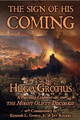
Greg L. Bahnsen and Kenneth L. Gentry, Jr.
430 pp.; Paperback
This book presents and defends Christian Reconstruction theology, particularly theonomic ethics and postmillennial eschatology. It does to by responding to dispensationalism's social and exegetical theology. This book demonstrates that revised dispensational theology (as established under Charles Ryrie and John F. Walvoord) has been shattered by its own defenders. They are no longer willing to defend the original system, and their drastic modifications have left it a broken shell.
Bahnsen takes on the law sections, while Gentry handles the eschatology. Dispensationalism teaches that God has two distinct plans: one for Israel and one for the Church. Bahnsen and Gentry show clearly that God never intended or taught about separate plans. Quite the opposite, God's plan for Israel was but the first phase of His plan for the world. Jesus was both God's plan and His solution before the foundation of the world (1 Peter 1:17-21).
House Divided is a postmillennial book. It does not seek to fight something (dispensationalism) with nothing (amillennialism). You are not being asked to abandon hope in dispensationalism's escape hatch in the future (the pre-tribulation Rapture) only to take up residence in amillennialism's Fort Contraction, with a tribe of howling Darwinian Indians circling it, all armed with repeating rifles. You are being asked instead to join a victorious army led by Jesus Christ, who sits at God's right hand, and who will remain seated there until He subdues all His enemies under His feet. ''Then cometh the end, when he shall have delivered up the kingdom to God, even the Father; when he shall have put down all rule and all authority and power. For he must reign, till he hath put all enemies under his feet" (1 Cor. 15:24-25).
Table of Contents
Publisher’s Foreword, Gary North
Preface by Gentry
Introduction
1. An Opportunity for Cross-Examination
Part I: The Ethical Question
2. The Conflict of Visions
3. The Reconstructionist Option
4. How Should We Then Decide?
5. The Failure of Accurate Portrayal
6. The Theological Concept of Law
7. The Jurisdiction of the Law
8. The Civil and Cultural Use of the Law
Part II: The Eschatological Question
9. The Conflict of Expectations
10. The Expectation of the Kingdom
11. The Nature of the Kingdom
12. The Presence of the Kingdom
13. The Mission of the Kingdom
14. The Victory of the Kingdom
15. The History of Theology on the Kingdom
16. The Preterist Interpretation of the Kingdom
Part III: The Scholarly Question
17. Argumentation Errors
18. Documentation Inadequacies
19. Ethical Lapses
Conclusion
20. Where Do We Go from Here?
Appendixes
Appendix A – Theological Schizophrenia, Gary DeMar
Appendix B – A Response to Hal Lindsey’s The Road to Holocaust
Reviews:
It is unusual for me to pick up a book and not be able to put it down. This was definitely one of those books. The book is logically organized and written in an easy to understand style.
I found the writers making a biblical and historical defence of the Reconstructionist position that, although I am not completely convinced, I am intrigued to investigate further. The book does make an excellent argument for the Post Millennium position while completely dismantling the pessimistic Dispensational view. The Appendix even contains a side by side comparison of the Jehovah Witnesses positions with the similarities of the Dispensationalist.
Although the book is written as a response to Dominion Theology by House and Ice from a Reconstructionist point of view, those whom do not hold such a position will still find the book worthy of reading. I have been instilled with a new sense of excitement concerning the Post Mil/Partial Preterist position after reading thus book because: a) It is biblical and makes the Bible more grandeur, b) It is historical as far back as the early church fathers, c) God is displayed as being more sovereign( If that's possible) and in complete control, d) There is a much higher level of hope and victory led by King Jesus, e) How we view evangelism is radically influenced by our eschatology, f) Biblical prophecy is larger and more accurate than the Dispensationalist who uses the latest headlines to guide them, g) Jesus is ruling and reigning and is not in a position of defeat.
— B. Langdon
This is a work worthy of attention. The critique of Dispensationalism is valid. And, despite some, the Postmil view espoused in this book cannot be fairly labeled as merely utopian, and certainly the victory and hope found in Postmil does not deny the teachings of Christ concerning the poor in spirit or those who mourn. Instead, the hope is a final hope. Christ will indeed be victorious. That is what is interpreted by Postmils. In fact, Postmil teaching is more often criticized for suggesting GREATER trials in store than it is for offering some type of Utopian bliss. Give it a fair read. It will be informative and worthy of consideration.
— D. Harelson Morrow